
About Erfenis 40–45 – Museum about the Second World War

Michael Honcoop, founder of Erfenis 40–45, owns a museum and historical collection dedicated to the Second World War (1940–1945). Fascinated by this period of history since the age of eight, what began as a childhood curiosity developed into a lifelong passion for collecting, preserving, and sharing original wartime heritage.
From personal passion to museum

Now, more than 45 years later, that passion has led to Erfenis 40‑45: a unique collection of historical objects from the Second World War. The collection consists not only of military and civilian items, but above all of personal stories. Stories of people who lived under occupation, in a time of fear and uncertainty, but also of courage, resistance, and hope.

The importance of remembering and commemorating

With this museum, Michael aims to contribute to keeping the history of the Second World War in the Netherlands alive. Not only by showing what happened, but especially by making people feel why this history must never be forgotten.
Each object in the collection tells its own story and forms a tangible part of our shared heritage from the years 1940–1945.

Education, awareness, and legacy

For Michael, Erfenis 40‑45 is more than a collection or an exhibition. It is a mission:

  • to remember,
  • to pass on knowledge to new generations,
  • and to create awareness about war, freedom, and responsibility.

For the generation of today—and those of tomorrow.

Michael warmly invites you to discover and experience this remarkable history for yourself at Erfenis 40‑45.

Visitors information

General

The museum is located in Michael’s home.
Children under 12 are only welcome when accompanied by an adult. Eating, drinking, and/or smoking by visitors is not permitted.

PLEASE NOTE: The museum can only be visited by appointment.

Free admission
Erfenis 40‑45 is located at De Velden 222 in Schiedam.
Admission is free, but a small contribution is greatly appreciated!

Free parking
You can park for free on De Velden. Please note that, because the museum is located in a residential home, parking space is limited.

Public transport
The museum can be reached by public transport via tram line 11 or bus 53. Get off at the “De Woudhoek” stop. From there, it is a 5‑minute walk to De Velden 222.

Collection

Here you will find a few examples from the Erfenis 40‑45 collection.

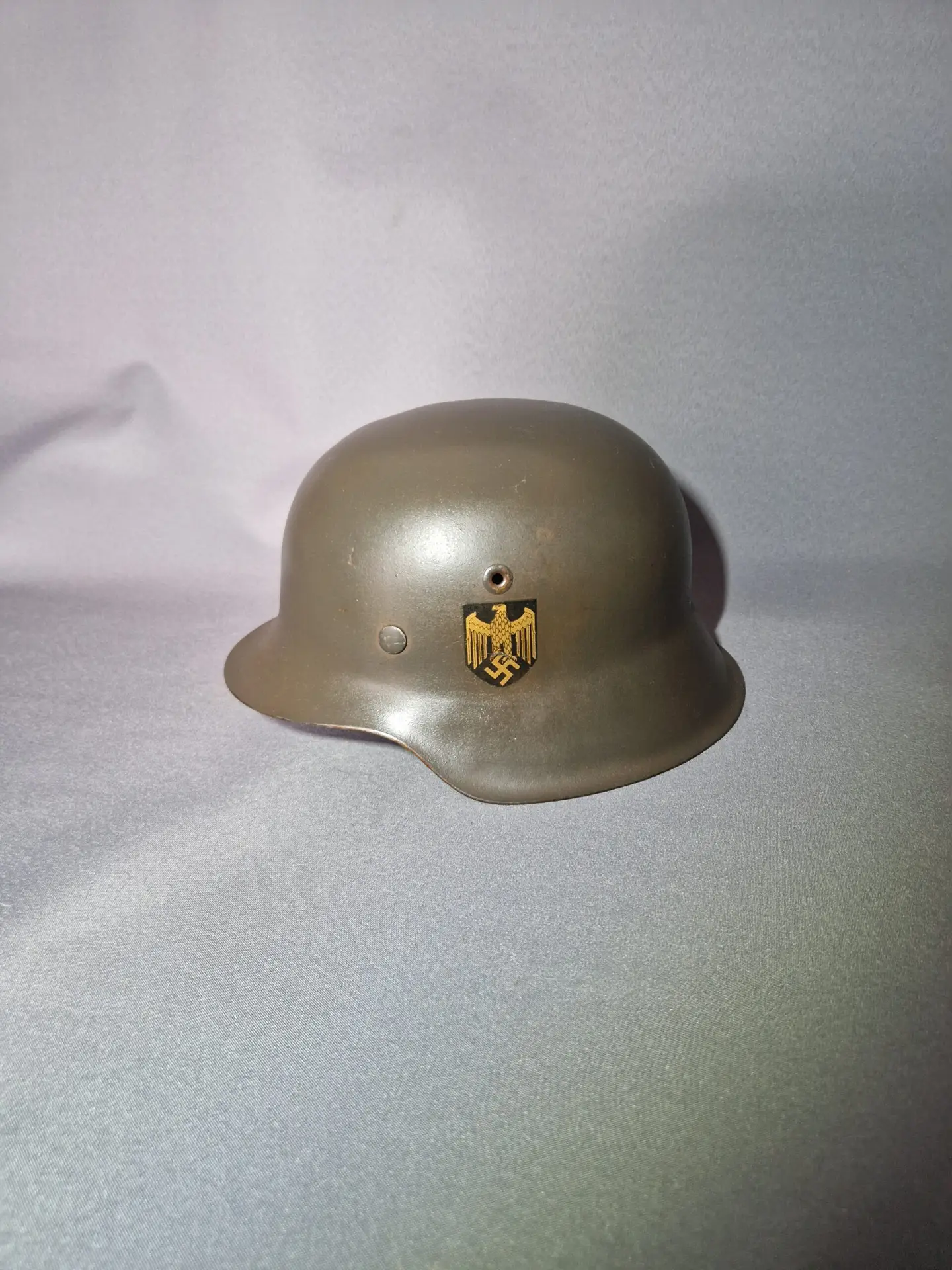
Kriegsmarine helmet

This is a German Stahlhelm M35 (Model 1935) from the Second World War. The specific shield (the decal) on the side, showing the eagle with the swastika in gold color, indicates that it is from the Kriegsmarine.
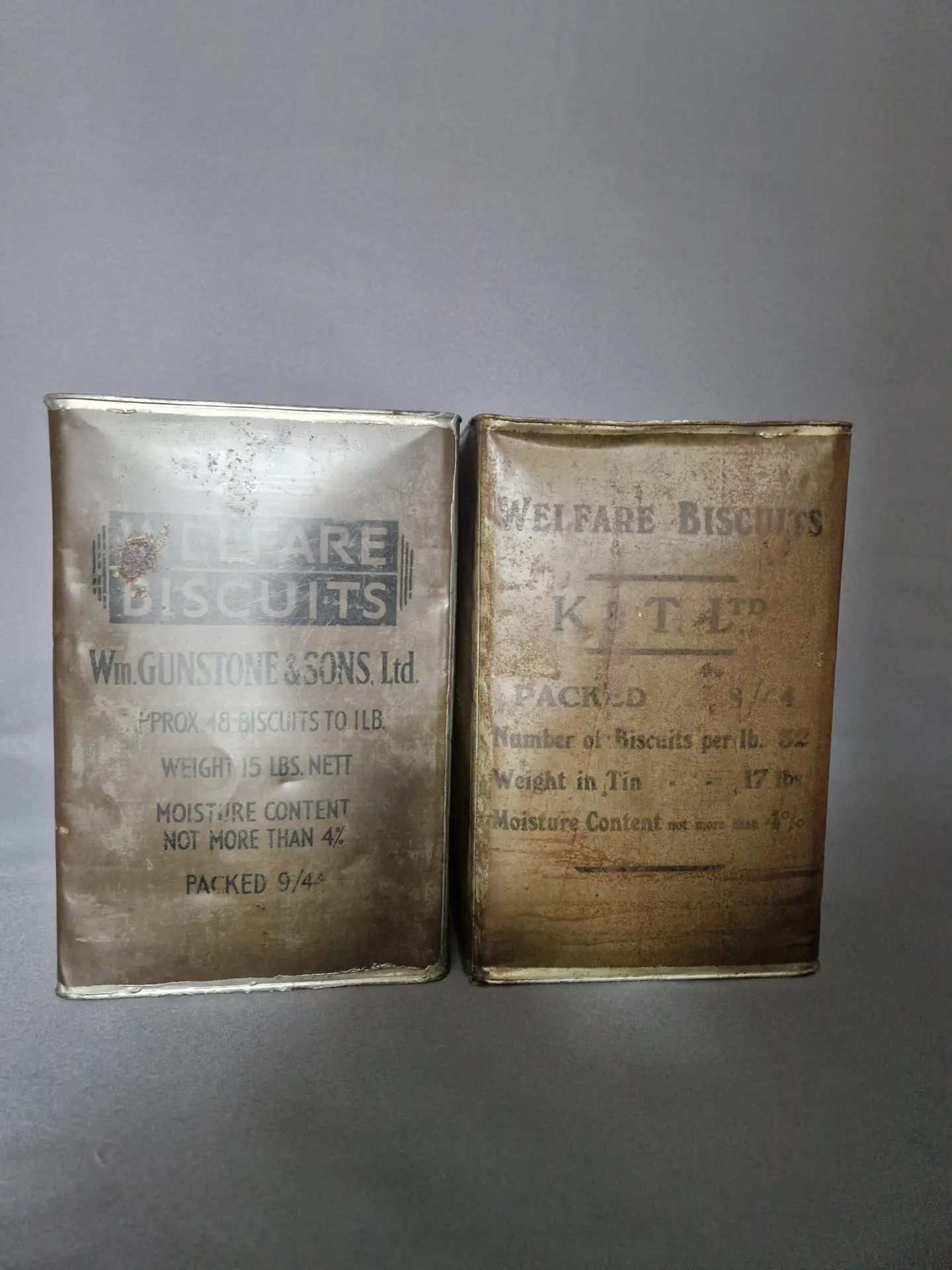
Welfare Biscuits cans

Welfare Biscuits were specially developed, high-calorie emergency biscuits produced by the British government during the Second World War to help feed starving civilians in liberated Europe. They were packed in large tins, usually weighing 18 pounds (about 8 kilograms), and were manufactured by well-known British producers such as Carr & Co, Huntley & Palmers, and Meredith & Drew. Historical significance and the Hunger Winter A symbol of emergency aid: In the Netherlands, these biscuits are closely associated with the Hunger Winter of 1944–1945.
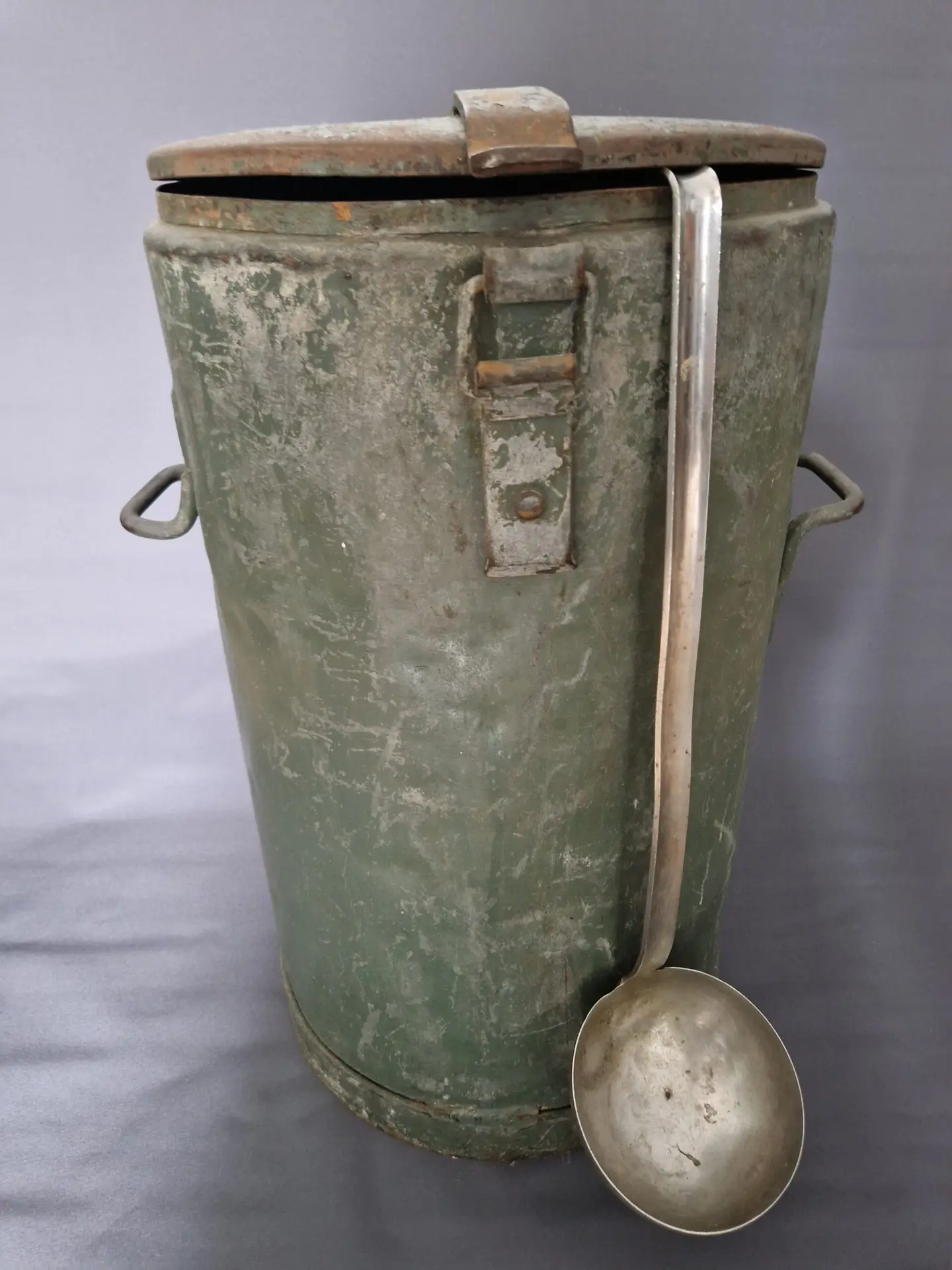
Food container with ladle.

During the Second World War, central soup kitchens in Zaandam depended on so-called “food barrels” (wooden or steel containers) for the distribution of food. These were used to transport scarce and watery meals, such as soup or porridge, in bulk from central production kitchens to various distribution points in the Zaan region. Food supply during the Hunger Winter in the Zaan region was organized through specific channels.

Do you have wartime heritage from 1940–1945? Donate it to our museum.

Many special objects from the Second World War are still lying in attics, basements, or somewhere at the back of a cupboard. These are often items with a personal story that are (unintentionally) at risk of being lost or even thrown away.

We would like to preserve this valuable heritage for future generations.

Do you still have objects at home from the period 1940–1945? For example:

  • Letters and documents
  • Photographs
  • Personal belongings
  • Diaries
  • Military items or everyday objects from that time

There is an opportunity to donate these to our museum. In this way, these objects are given a proper place and the story behind them is preserved.

Every contribution, large or small, can be valuable. Together, we ensure that the history of the Second World War remains tangible and visible.

Please feel free to contact us to discuss the possibilities.

Collection Donors

Kurt Middelkoop
Henk de Jong
Luud van der Linden
Mevr de Gids
Iet Stubbe
Arnold v Klaveren
Natasja Helleman
Lettie dalm
Ronald Hemerik
Jan Geleijnse
Jolanda en Ger van Eden
Mariane de Zwart van Beers
CA Verkerk
Cris de Roode
Diederik demeijer
Damian czechelius
Mike Wezenaar
Eri Harms
Jeanette Pil-Veldboer
Nel de Boom-Swart

6 Anonymous Donors

Support our museum with a donation

Preserving and sharing the history of the Second World War is only possible with the support of committed people. With your financial contribution, you help us continue to collect, preserve, and make valuable stories accessible to a wide audience.

Your donation contributes to, among other things:

  • The preservation and restoration of historical objects
  • The design and maintenance of exhibitions
  • Educational projects for young and old
  • Recording personal stories from this period

Every contribution, large or small, makes a difference. Thanks to your support, we can continue to pass on the heritage of 1940–1945 to future generations.

Would you like to support us? Please feel free to contact us or make a donation via the options on this website.

Together, we keep history alive.

Scan this QR-code to support our museum

Our supporters